

Landline Telephony – Part 1: From Copper and Street Cabinets to Fiber Optics
Landline Telephony – Part 1: From Copper and Street Cabinets to Fiber Optics
The evolution of telephone networks, traditional distribution frames, ADSL and VDSL, FTTH technology, and the gradual retirement of copper infrastructure. What is changing in Greece and worldwide, and why landline telephony is undergoing one of the greatest transformations in its history.
Introduction – The Telephone That Changed the World Is Changing Itself
There was a time when the sound of a ringing telephone could attract the attention of an entire household. The device usually occupied a permanent place in the home, its cable ended at a telephone socket, and communication depended on an enormous network of copper conductors.

For decades, obtaining a landline connection was an important milestone. In businesses and hotels, private telephone exchanges and internal wiring systems were essential parts of the building’s technical infrastructure.
Today, the very same telephone may be connected to a router, with speech converted into digital data and communication taking place over an IP network.
The user may not even notice the difference.
They lift the handset, dial a number, and speak exactly as they always have.
But behind that familiar action, the technology has changed dramatically.
The landline telephone is not necessarily disappearing. What is gradually disappearing is the traditional technology that once made it work.
This transition affects telecommunications operators, urban infrastructure, electrical contractors, network technicians, businesses, and consumers.
In the first part of this technical series, we follow the journey of a telephone connection: from the traditional two-wire copper network and distribution frames to modern street cabinets, fiber-optic infrastructure, and the restructuring of telecommunications networks.
1. Traditional Landline Telephony – A Network Built on Copper
Conventional landline telephony was based on the Public Switched Telephone Network (PSTN).
In a traditional analog telephone connection, the subscriber was typically connected to the local telephone exchange through a pair of copper conductors.
Just two wires were enough to establish a telephone conversation.
The microphone inside the telephone converted the user’s voice into an electrical signal, which traveled through the network. At the receiving end, the other telephone converted the electrical signal back into sound.
Telephone exchanges supported this process by routing and connecting calls.

Από τα πρώτα τηλεφωνικά κέντρα
From Electromechanical to Digital Telephone Exchanges
The earliest telephone networks relied on operators who manually connected subscribers.
Automatic electromechanical exchanges followed, using switching mechanisms to select and connect the appropriate telephone lines.
Later, electronic and digital switching systems replaced much of this equipment, providing greater capacity, additional services, and more efficient call management.
As a result, even while the final connection to the subscriber remained analog, substantial parts of the telecommunications network had already become digital.
The Electrical Operation of an Analog Telephone Line
In a traditional analog telephone system, the exchange supplied the electrical power required by the subscriber line.
The nominal DC supply voltage was commonly around 48 V, although actual values depended on the circuit design and operating conditions.
When the subscriber lifted the handset, the resulting change in circuit conditions was detected by the telecommunications equipment.
Telephone numbers were initially selected through pulse dialing, while Dual-Tone Multi-Frequency (DTMF) signaling later became widely established.
For an incoming call, a special alternating ringing signal was applied. Its voltage could be considerably higher than the line’s normal DC supply voltage.
The fact that a telephone cable contains only two thin conductors does not mean it is always electrically harmless.
Working on live telecommunications infrastructure requires suitable procedures and equipment.
The Great Advantage of the Traditional Telephone
One of the most important characteristics of traditional landline telephony was the ability of a simple wired telephone to continue operating during a household power outage.
The necessary power came from the telephone exchange, which had its own supply and backup power systems.
This advantage applied to suitable basic corded telephones. It did not necessarily extend to DECT cordless telephones or other devices requiring local electrical power.
Nevertheless, it was an extremely valuable reliability feature.
The old landline telephone could keep ringing even when the entire house was in darkness.
With modern router-based telephony, that is no longer something we can automatically take for granted.
2. The Journey of a Telephone Line – From the Exchange to the Wall Socket
Behind a simple telephone socket was an extensive distribution network.
A typical route through a traditional copper network might include:
Local telephone exchange → Main Distribution Frame → Feeder cables → Street cabinet → Distribution network → Building distribution frame → Telephone socket
Each stage had a specific technical function.
Main Distribution Frame – MDF
The Main Distribution Frame (MDF) was one of the most important elements of traditional telecommunications infrastructure.
It consisted of an organized system for terminating and cross-connecting telecommunications cables.
A large MDF could accommodate thousands of copper pairs.
Technicians installed, modified, and removed jumper connections so that each subscriber line was connected to the appropriate telecommunications equipment.
Accurate pair numbering and documentation were essential.
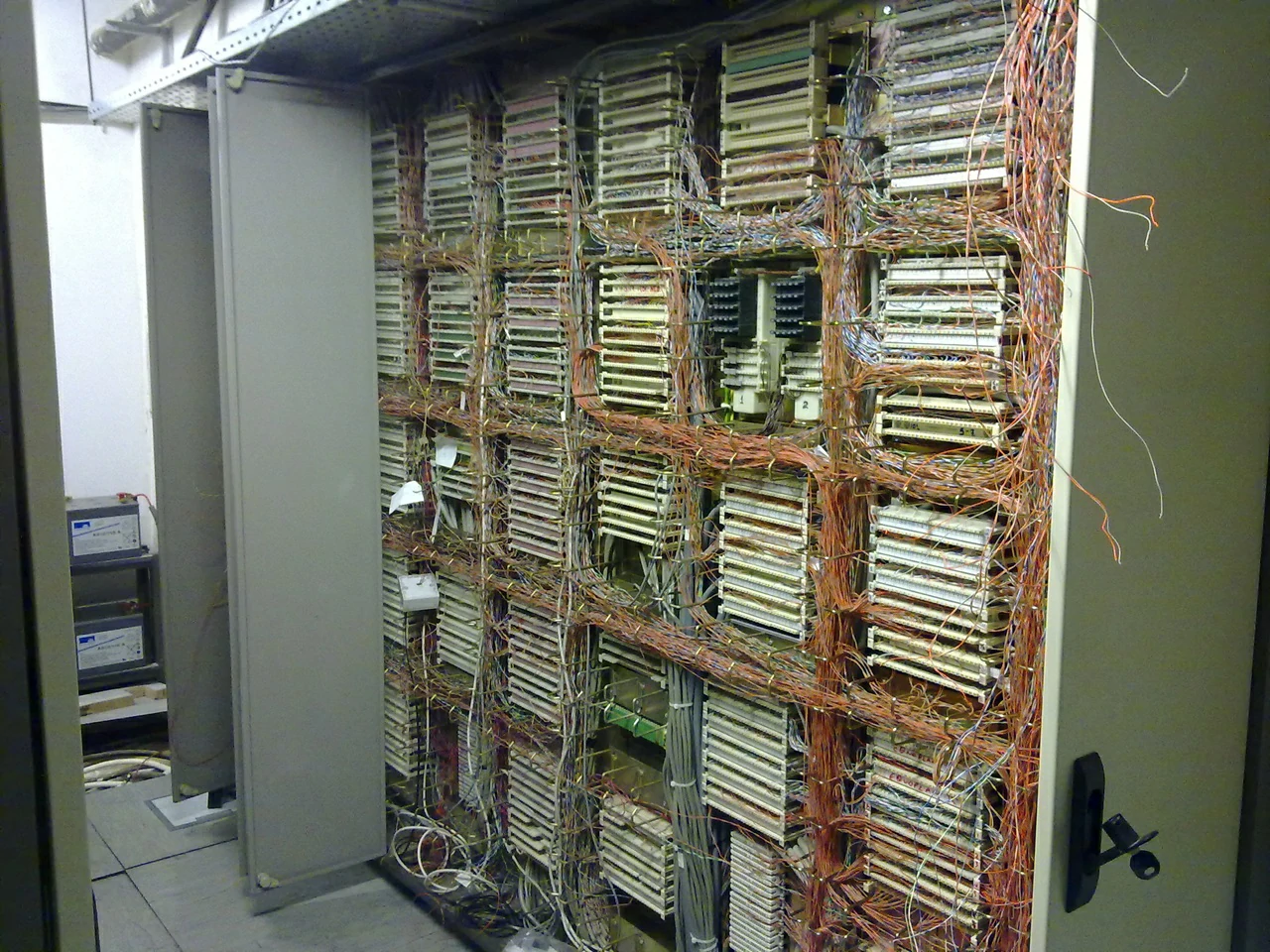
<underline>Photo placement:</underline> Original photograph of the large-capacity telephone distribution frame from the ElectricalNews.gr technical archive.
Photo caption: A real high-capacity telephone distribution frame, featuring terminal blocks and thousands of copper-pair connections. Photograph from the personal technical archive of Kostas Petrakis.
An error in pair identification could result in a fault or service interruption affecting a different subscriber.
High-Capacity Copper Cables
Large cables containing substantial numbers of copper pairs ran from telephone exchanges into the external distribution network.
Depending on the network design, these cables reached street cabinets and branching points.
Their connections had to be protected against moisture, corrosion, mechanical stress, and other environmental conditions.
In coastal and island environments, humidity and salt exposure can be particularly damaging to metallic connections.
This is one reason why connection quality, correct termination, and environmental protection of telecommunications equipment are so important.
3. Street Cabinets – Much More Than Metal Boxes
Almost everyone has seen the familiar metal telecommunications cabinets installed along streets and sidewalks.
Some are small, others are much larger, and certain cabinets have visibly different designs.
In Greece, these installations are commonly known as KAFAO, a colloquial term used for street telecommunications cabinets.
However, not all street cabinets use the same technology or perform exactly the same function.
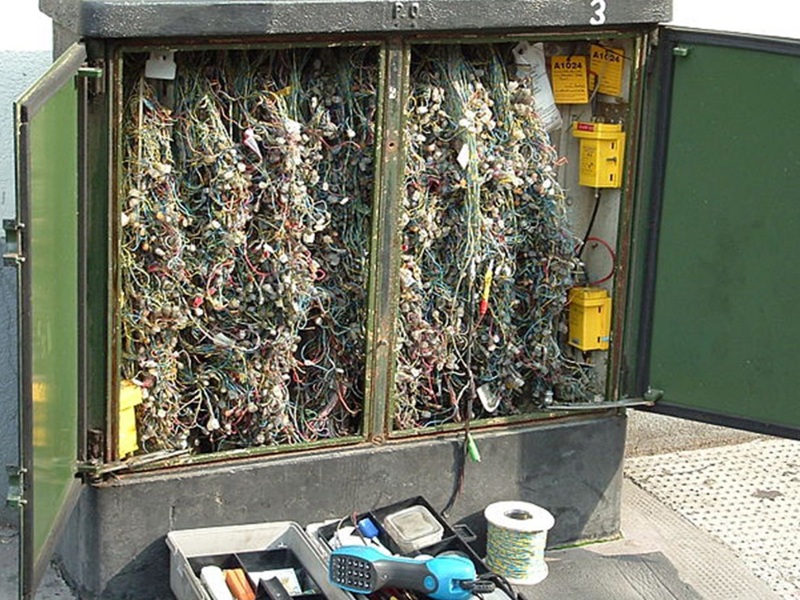
Traditional Copper Distribution Cabinets
In conventional copper networks, street cabinets served as collection, termination, and cross-connection points for telephone pairs.
Technicians could install jumper connections between incoming feeder pairs and outgoing distribution cables.
These were essentially passive distribution points.
They did not necessarily contain active electronic equipment for processing telephone signals.
Modern Active Street Cabinets
The development of broadband services significantly changed the role of many outdoor telecommunications cabinets.
They could now contain active equipment, including Digital Subscriber Line Access Multiplexers (DSLAMs) for VDSL services.
Depending on the installation, a modern active cabinet may contain:
- DSL access equipment.
- Electrical power supplies and protection systems.
- Fiber-optic connections to the wider telecommunications network.
- Cooling or temperature-control equipment.
- Copper-pair terminations and interconnections.
The presence of active equipment introduces additional requirements for electrical power, thermal management, and maintenance.
Fiber-Optic Distribution Cabinets
Next-generation telecommunications networks also use outdoor fiber-optic distribution cabinets.
These may contain optical connections, termination points, fiber-management systems, and passive optical splitters.
They should not be confused with active DSL cabinets.
The use of fiber optics does not mean that every outdoor cabinet requires an independent power supply.
In many FTTH architectures, substantial parts of the optical distribution network use passive components.
The street cabinet outside our home may be a simple copper distribution point, an active telecommunications node, or a modern fiber-optic distribution cabinet.
Its external appearance alone is not enough to determine the equipment installed inside.
4. Building Telephone Distribution Frames and Internal Cabling
The journey of a telephone line does not end at the street cabinet.
The network eventually reaches the building, where connections are distributed to individual apartments, offices, or commercial premises.
This is where the building’s telephone distribution frame is normally located.
Cables then run from this point to the various areas served.
How Important Is Cable Quality?
In traditional analog telephony, a line with less-than-ideal electrical characteristics could sometimes still support an acceptable conversation, although noise might be present.
With digital DSL services, however, copper cable conditions can significantly affect connection stability and speed.
Common problems include:
- Poor or oxidized contacts.
- Moisture inside junction boxes.
- Inadequate cable joints.
- Old parallel branches or unterminated stubs.
- Poor-quality cabling.
- Unsuitable internal wiring topology.
- Electromagnetic interference and crosstalk between neighboring pairs.
For installation professionals, appropriate cable selection, preservation of twisted-pair geometry where required, and correct termination practices are fundamental aspects of a reliable installation.
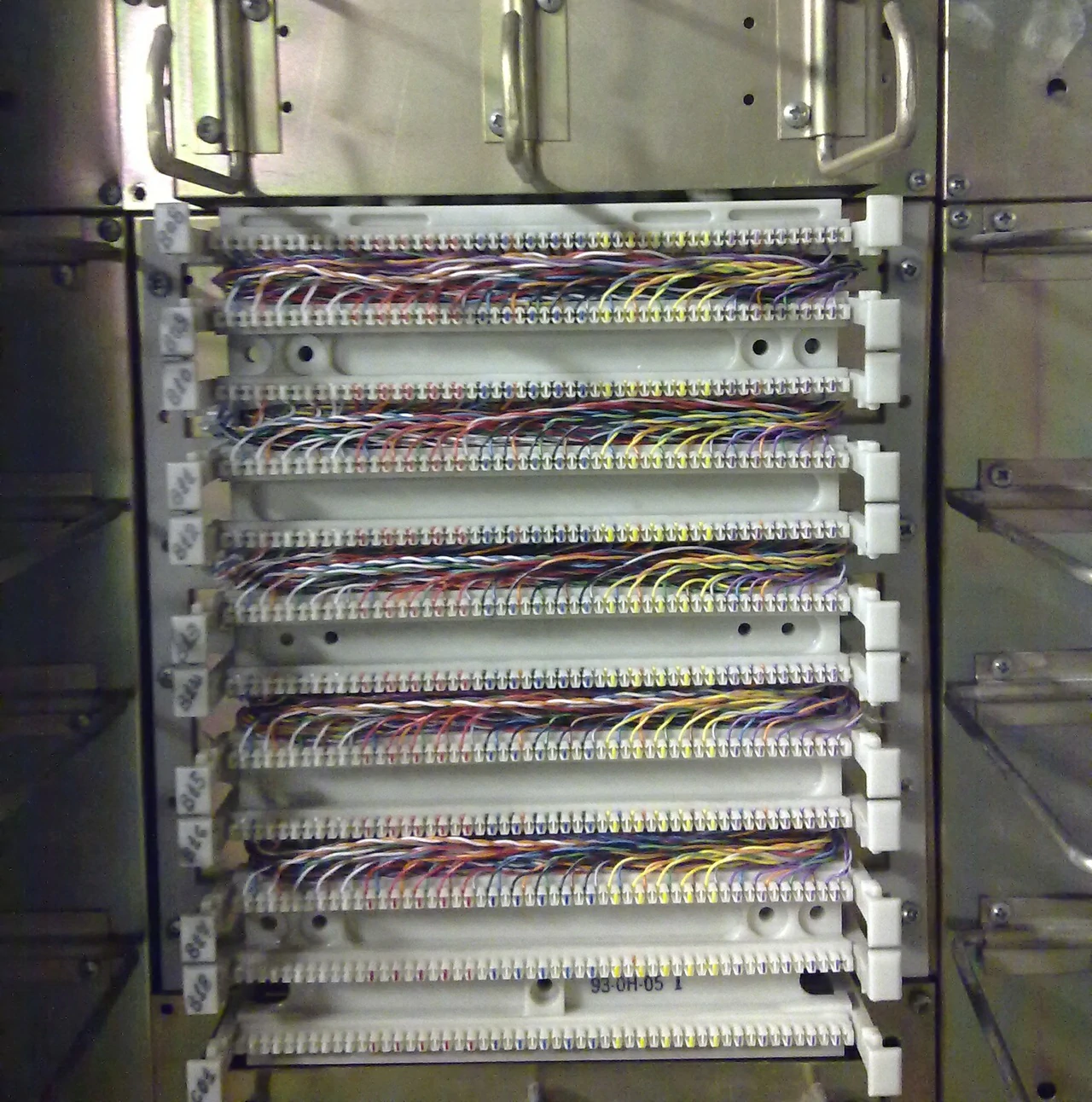
Broadband performance does not depend exclusively on the service provider.
It may also be affected by the final few meters of wiring inside the building.
A modern telecommunications network may reach the entrance of an apartment building, only to encounter an internal installation dating back several decades.
5. ADSL and VDSL – When Telephone Cables Started Carrying Internet Traffic
The widespread adoption of DSL technologies transformed how traditional copper networks were used.
Copper pairs originally installed for telephone services began providing broadband Internet access.
ADSL – Internet Through an Existing Telephone Line
Asymmetric Digital Subscriber Line (ADSL) represented an important stage in the expansion of residential Internet access.
It enabled digital data transmission over an existing copper telephone pair.
The technology was asymmetric, meaning that download speeds were generally higher than upload speeds.
Where ADSL and conventional analog telephony operated on the same pair, suitable frequency filters or splitters were used.
This allowed the telephone and Internet equipment to share the same physical line.
VDSL – Higher Data Rates Over Copper
VDSL and VDSL2 subsequently enabled significantly higher data transmission speeds.
However, their performance is strongly influenced by distance and the electrical characteristics of the copper line.
As the copper section becomes longer, high-frequency transmission becomes more challenging. Attenuation, interference, and cable conditions become increasingly important.
These limitations were among the main reasons behind the development of Fiber to the Cabinet (FTTC) architecture.
A Common Misconception
Many people assume that if Internet access arrives through a telephone cable, the telephone service itself must still be analog.
That is not necessarily true.
A connection may use VDSL for data transmission while voice services are delivered digitally through VoIP.
In such an installation, a conventional telephone may be connected to a suitable telephone port on the router.
The call is then carried over a digital network.
We must therefore distinguish between two different concepts:
The physical access medium: Copper, fiber optic cable, or another connection technology.
The voice service technology: Traditional analog telephone access or digital voice transmission over an IP network.
Understanding this distinction is fundamental to understanding modern landline telephony.
6. FTTC and FTTH – The Great Transition to Fiber Optics
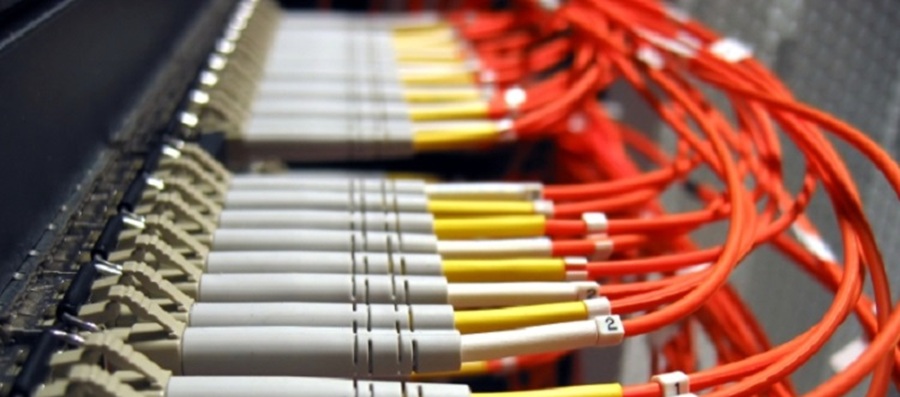
Optical Patch cords
<underline>Photo placement:</underline> Fiber-optic patch cords, as shown in the original Greek article.
The development of fiber-optic networks has allowed telecommunications operators to gradually reduce their dependence on copper infrastructure.
Two important network architectures are FTTC and FTTH.
FTTC – Fiber to the Cabinet
With FTTC, the optical fiber reaches an outdoor telecommunications cabinet.
From that cabinet to the home or business, the connection typically continues through a copper pair using technologies such as VDSL2.
The shorter copper distance can provide better performance than a comparable connection served directly from a distant telephone exchange.
Nevertheless, the physical limitations of copper remain.
FTTH – Fiber to the Home
With Fiber to the Home (FTTH), optical fiber extends to the subscriber’s premises.
The access network no longer depends on a final copper telephone section.
A typical Passive Optical Network (PON) architecture includes:
OLT – Optical Line Terminal: Equipment on the operator’s network that serves optical access connections.
Optical Distribution Network: Fiber-optic cables, connections, and appropriate passive splitters.
ONT – Optical Network Terminal: Terminal equipment installed at the subscriber’s premises.
The ONT may be a separate device or integrated into a suitable router.
FTTC vs. FTTH – Technical Comparison
| Feature | FTTC | FTTH |
|---|---|---|
| Fiber-optic termination | Outdoor street cabinet | Subscriber’s premises |
| Final access section | Copper pair | Optical fiber |
| Typical access technology | VDSL/VDSL2 | PON or another optical technology |
| Impact of copper cable quality | Significant | No equivalent copper access section |
| VoIP support | Yes | Yes |
Is Fiber Optics Only About Faster Internet?
No.
Fiber-optic infrastructure can support many different telecommunications services.
Beyond Internet access, it can provide the foundation for telephony, business connectivity, data transmission, television services, and other applications.
The transition to fiber optics is therefore not simply about increasing Internet speed.
It represents the replacement of infrastructure originally designed around voice communication with infrastructure designed for a much broader range of digital services.
7. International Statistics Reveal the Direction – Copper Declines as Data Networks Expand
The transformation of telecommunications networks is not limited to Greece.
International organizations have documented the decline of traditional fixed telephone subscriptions alongside the continuing expansion of broadband access.
ITU 2026 – Fewer Fixed Telephone Subscriptions
According to the International Telecommunication Union’s Facts and Figures 2026 report, fixed telephone subscriptions worldwide declined by an average of 2.8% per year over the preceding five-year period.
In contrast, fixed broadband subscriptions increased by an average of 4.7% annually over the same period.
The ITU also estimated approximately 21 fixed broadband subscriptions per 100 inhabitants worldwide in 2026.
While fewer people maintain traditional fixed telephone subscriptions, more people rely on fixed networks for digital services.
This is perhaps the most important characteristic of the transition.
OECD 2026 – Fiber Exceeds Half of Fixed Broadband Subscriptions
According to the OECD Digital Economy and Society Outlook 2026, fiber connections accounted for 50.7% of fixed broadband subscriptions across OECD countries in December 2025.
This figure covers fiber-based access technologies, including FTTH and FTTB.
It does not mean that 50.7% of all homes had an active fiber-optic connection.
Nevertheless, the statistic illustrates the increasingly important position of optical fiber in modern access networks.
A few decades ago, connecting a home to the telephone exchange through a copper pair was considered the normal solution.
Today, fiber optics has become the dominant fixed broadband access technology in many countries.
The world is not abandoning fixed communication networks. It is increasingly using those networks for much more than traditional telephone calls.
8. What Is Happening in Greece? The Hellenic Telecommunications Regulator’s Figures
The Greek telecommunications market is following the same general direction, although the pace of transition differs between regions.
According to the 2024 Market Review published by the Hellenic Telecommunications and Post Commission (EETT) in December 2025, Greece had 4,673,246 fixed telephone lines.
At the same time, total fixed telephone traffic recorded an annual decline of 24.2%.
Meanwhile, FTTH connections increased by 72%, reaching 14.2% of the country’s fixed broadband lines.
Three Numbers, One Important Conclusion
| EETT Indicator | 2024 Figures |
|---|---|
| Fixed telephone lines | 4,673,246 |
| Annual change in fixed telephone traffic | −24.2% |
| Annual growth in FTTH lines | +72% |
These percentages measure different indicators and should not be compared as though they represented the same quantity.
However, they reveal two parallel trends.
On the one hand, the use of fixed telephone connections for voice calls is declining significantly.
On the other, investment continues in the development of modern telecommunications infrastructure.
Greece still has millions of fixed telephone lines. What is changing is how those connections are used and the technology that supports them.
9. The Gradual Retirement of Copper – Copper Switch-Off
One of the most important terms increasingly encountered in the telecommunications industry is Copper Switch-Off.
It describes the organized, gradual retirement of selected legacy copper access infrastructure as services migrate to newer networks.
This is not simply a matter of replacing a cable.
The process may require changes to operator equipment, subscriber terminal devices, and installations that depend on traditional telephone lines.
The United Kingdom as an Example
The British communications regulator, Ofcom, states that BT plans to retire its legacy telephone network by 31 January 2027.
This date concerns that particular network and the migration of its customers to digital telephony or another suitable service.
It does not mean that every copper telecommunications cable in the United Kingdom will be physically removed on that date.
Ofcom also emphasizes the need for special attention to users of telecare systems, personal alarms, and other equipment connected to telephone lines.
This provides an important international example of the technical and social challenges involved in the transition.
What About Greece?
The retirement of legacy copper infrastructure has already been addressed through regulatory decisions by EETT.
One example concerns the Copper Switch-Off process associated with the OTE local exchanges of Kalamaria, Vyzantio, and Panorama, including a subsequent reissued regulatory decision.
This demonstrates that the transition is already the subject of specific planning and regulatory activity in Greece.
However, there is no single nationwide date for the retirement of every copper telecommunications network.
Progress will depend on available infrastructure, operators’ decisions, regulatory procedures, and subscribers’ requirements.
Will Street Cabinets Disappear?
Not necessarily.
The gradual decline of copper networks does not eliminate the need for outdoor distribution points.
Fiber-optic distribution cabinets remain fundamental components of many modern networks.
<underline>Photo placement:</underline> Traditional copper street cabinet – interior view.
Photo caption: Interior of a traditional telecommunications street cabinet, showing copper-pair distribution and connections.
<underline>Photo placement:</underline> Modern street telecommunications cabinet.
Photo caption: Modern telecommunications street cabinet, illustrating the evolution of outdoor network infrastructure.
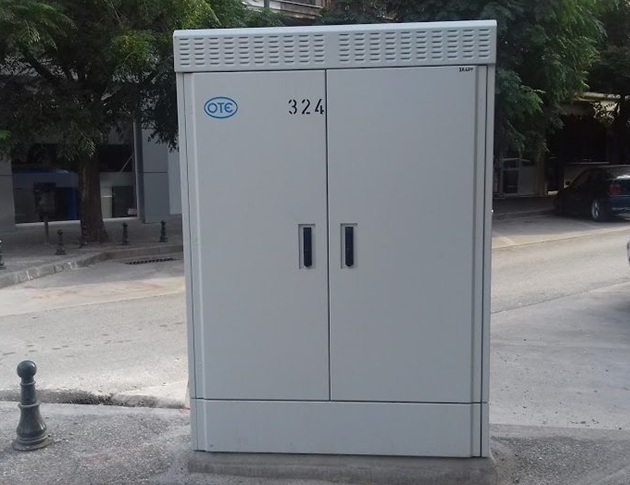
What changes is the technology, the equipment, and the way connections are managed.
Some old cabinets may be retired, others replaced, and some may remain in service for particular applications.
The telecommunications distribution cabinet is not disappearing from engineering practice. Its form and function are evolving.
10. A Major Change Affecting Every Home and Business
The transition from analog to digital telephony may create practical issues that are not immediately obvious to consumers.
A conventional telephone handset may continue to operate in much the same way as before.
However, this is not necessarily true for every older device designed to work with a traditional analog telephone line.
Particular attention should be given to older alarm dialers, certain telecare systems, specialized telecommunications devices, and equipment requiring specific analog line characteristics.
The presence of a telephone port on a router does not automatically guarantee compatibility with all such equipment.
Compatibility must be assessed according to the manufacturer’s specifications and the service provider’s capabilities.
What Happens During a Power Outage?
Let us return to the example of the traditional telephone.
A conventional corded telephone connected to a suitable PSTN line could operate without electrical power being available inside the home.
By contrast, a modern telephone connection relying on a router, ONT, or other locally powered equipment needs electricity to function.
Consequently, during a power outage, telephone service may be interrupted even if the operator’s external telecommunications network remains operational.
A suitable backup power supply may keep the necessary local equipment operating for a limited period, provided the operator’s network also remains available.
The British regulator Ofcom specifically addresses this issue, emphasizing the ability of customers who depend on their landline to contact emergency services.
Modern telephony may be technologically more advanced, but this does not automatically make every modern installation more resilient to electrical power failures.
Reliability requires proper planning.
This is particularly important for homes, businesses, hotels, and facilities where communication must remain available during abnormal operating conditions.
Conclusion – Landline Telephony Is No Longer What We Once Knew
The traditional copper telephone network served communications for more than a century.
Main distribution frames, underground cables, outdoor street cabinets, and building telephone installations formed the physical infrastructure that supported the development of landline telephony.
Later, the same infrastructure was adapted for data transmission, playing a decisive role in the widespread adoption of Internet access.
Today, the expansion of fiber-optic networks is transforming telecommunications infrastructure once again.
Statistics published by ITU, OECD, and EETT confirm that traditional fixed telephone usage is declining while modern broadband services continue to expand.
This does not mean that voice communication over fixed networks is losing all its value.
Landline telephony still serves millions of subscribers, while many businesses and professional facilities continue to require organized telephone systems.
The major question is no longer simply whether we will continue using landline telephones. It is which technologies will carry our calls, how reliable those services will be, and what requirements they will create for modern installations.
These are precisely the questions we will examine in the next part of this series.
Coming Soon – Part 2: VoIP – When Voice Travels Over the Internet
Traditional telephone networks are changing. Copper infrastructure is gradually giving way to optical fiber, and telephone services are increasingly being delivered through digital networks.
But what actually happens when we pick up a telephone handset and make a call today?
How does Voice over Internet Protocol (VoIP) work?
What is SIP? How does an IP telephone communicate with the network? And how is telephony organized in a modern business or hotel?
In the second part of our technical series, we will examine VoIP, SIP, IP-PBX, and SIP Trunk technology, the necessary telecommunications equipment, and the technical requirements of modern telephone installations.
The telephone on your desk may look the same. But the journey of your voice has changed completely.
Coming soon on ElectricalNews.gr.
Sources and Technical References
- International Telecommunication Union (ITU) – Facts and Figures 2026. Global trends in fixed telephone and fixed broadband subscriptions.
- Organisation for Economic Co-operation and Development (OECD) – Digital Economy and Society Outlook 2026. The evolution of broadband networks and fiber-optic connectivity.
- Hellenic Telecommunications and Post Commission (EETT) – 2024 Market Review. Fixed telephony and FTTH statistics for Greece.
- Ofcom – Your Landline Is Going Digital. Digital voice migration, service reliability, and backup power.
- EETT – Copper Switch-Off. Regulatory decisions concerning the retirement of legacy copper telecommunications networks.
Technical and statistical information last updated: November 2026.
Related Articles
- History of the Telephone – ElectricalNews.gr
- Optical Fiber: What Every Professional Should Know – Part 1 – ElectricalNews.gr


